1、 Core performance parameters
flow range
The flow rate of Roots blower covers 0.15~1200 cubic meters per minute, which can meet the needs of pneumatic conveying from small aquaculture to large cement plants. For example:
ZSR50 type: flow rate of 0.78-2.48 cubic meters per minute, suitable for small sewage treatment aeration tanks.
ZSR350 type: flow rate of 105.5~188.7 cubic meters per minute, used for large-scale pneumatic conveying systems.
Pressure capacity
The single-stage pressure range is 9.8~196 kPa, and the two-stage series can reach 392 kPa, suitable for different working conditions:
Low pressure scenario: such as aquaculture oxygenation (pressure usually ≤ 50 kPa).
High pressure scenario: such as preheater blockage in cement plants (pressure must be ≥ 150 kPa).
Speed and power
The speed range is 150~3000 revolutions per minute, and precise flow control is achieved through variable frequency regulation.
The power coverage ranges from 0.75 to 1000 kilowatts, matching the energy consumption requirements of systems of different scales. For example:
15 kW model: can support flow output of 4.91-35.01 cubic meters per minute (depending on model and pressure).
Efficiency and stability
High volumetric efficiency: The clearance between the impeller and the casing is only 0.15~0.30 millimeters, and the leakage rate is extremely low (≤ 5 milliliters/minute).
Stable operation: The three blade rotor design reduces airflow pulsation by 30%, vibration value ≤ 11.2 mm/s, and bearing life reaches 80000 hours.
2、 Analysis of structural advantages
Three leaf rotor design
Noise reduction and vibration reduction: Compared to the two blade type, the three blade rotor has a higher suction and exhaust frequency, reduces airflow pulsation by 3-5 decibels, and reduces vibration amplitude by 20%.
Sealing optimization: The uniformity of the impeller clearance is controlled within 0.02 millimeters, and with the use of a fluororubber oil seal, the internal leakage rate is ≤ 5 milliliters per minute to ensure gas purity.
Modular and standardized design
Universality of key components: Industrial grade materials (such as 7075T6 aviation aluminum) are used for rotors, bearings, gears, etc., supporting quick replacement and maintenance.
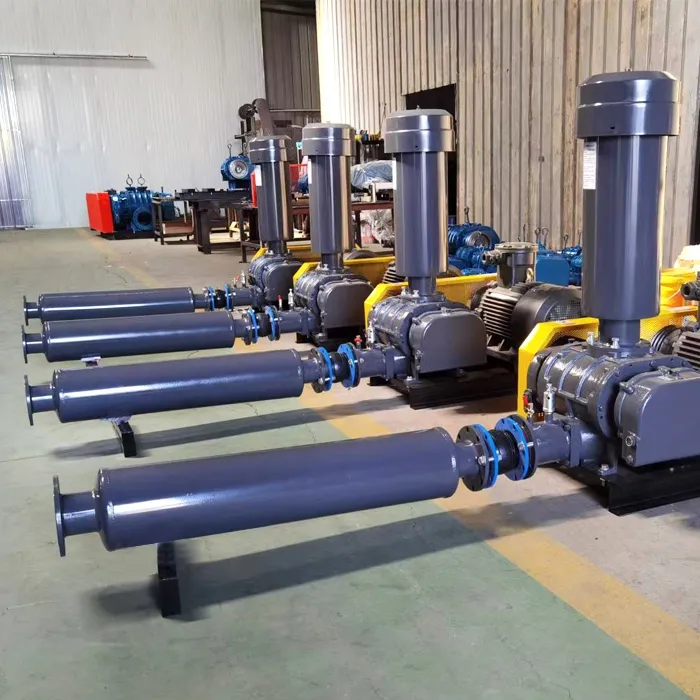
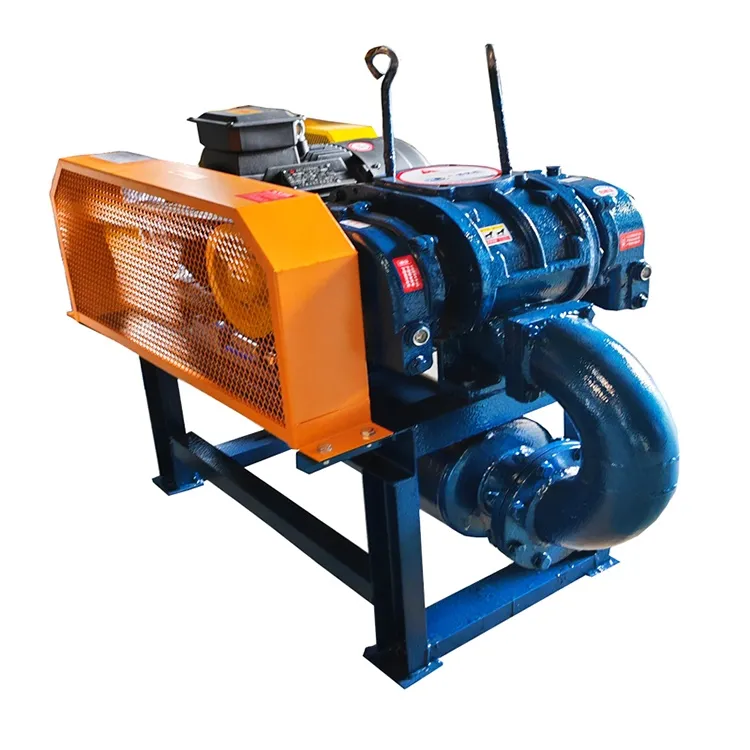
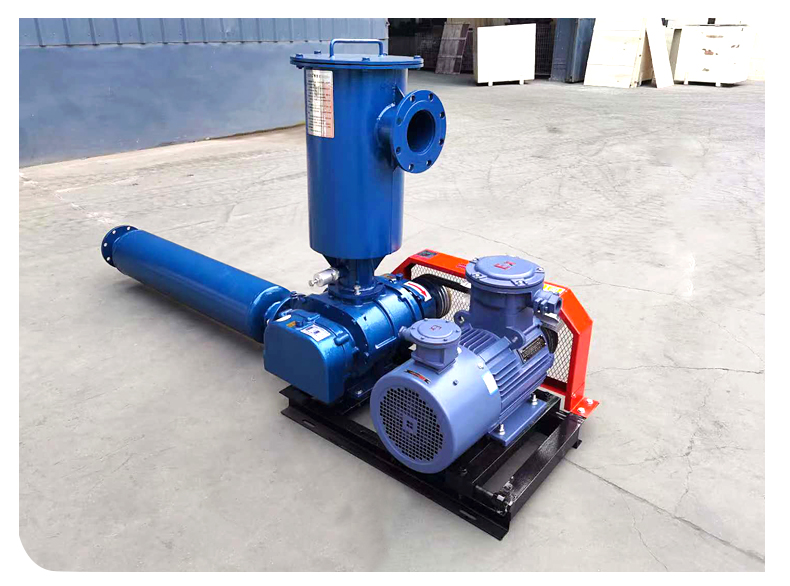
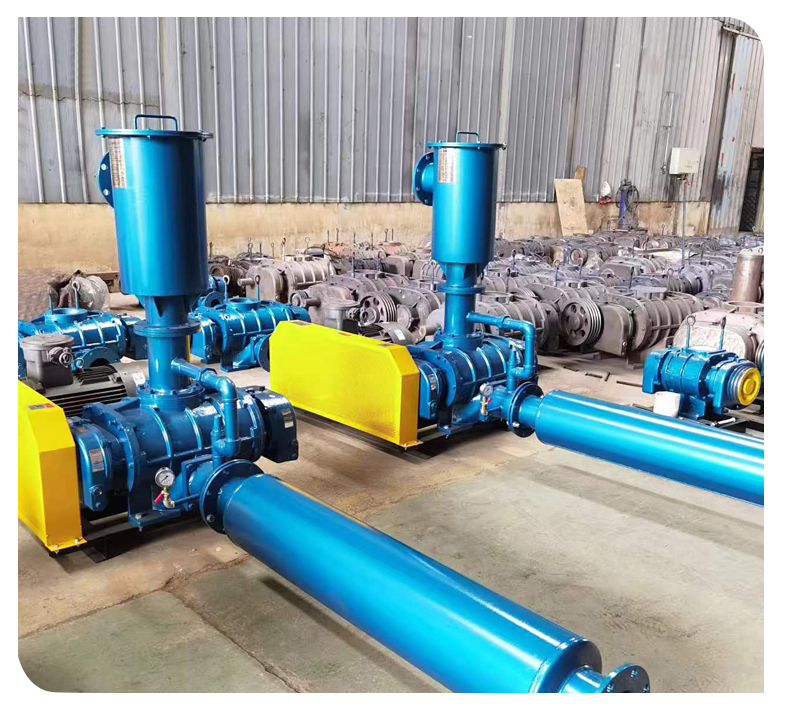
Installation flexibility: Provides various forms such as horizontal, vertical, submerged, etc. to adapt to different spatial layouts:
Horizontal model: low center of gravity, low vibration, easy maintenance (such as inspection window and fuel tank located on the side).
Vertical model: Small footprint, suitable for space constrained scenarios (such as underground pipeline systems).
High precision manufacturing process
Numerical control machining and dynamic balancing: The dynamic balancing accuracy of the impeller reaches G6.3 level, ensuring minimal centrifugal force during high-speed operation.
Synchronous gear drive: The gear tooth surface hardness is HRC58~62, with a lifespan of over 50000 hours, maintaining strict synchronous reverse rotation of the rotor.
Adapt to harsh working conditions
High temperature resistant design: High temperature models are equipped with cast steel water-cooled sleeves, which can operate continuously in an environment of 150 ℃.
Anti corrosion material: When transporting special gases such as biogas and sulfur dioxide, the rotor is sprayed with tungsten carbide and the shell is made of 316L stainless steel.
3、 Typical application scenarios
Environmental Engineering
Sewage treatment aeration: Provide stable airflow (flow rate of 2-20 cubic meters/minute) and maintain dissolved oxygen level of 2-4 milligrams/liter.
Flue gas desulfurization: High pressure models (pressure ≥ 150 kPa) transport limestone slurry to enhance desulfurization efficiency.
Industrial Conveyor
Cement pneumatic conveying: The two-stage series model (pressure 392 kPa) achieves long-distance conveying (≥ 500 meters).
Coal powder conveying: The rotor is sprayed with tungsten carbide, which increases the wear resistance by three times and extends the service life to 20000 hours.
Special working conditions
Fermentation tank ventilation: The sterile design model (equipped with a nitrogen isolation system) delivers clean air to prevent microbial contamination.
Submerged aeration: IP68 protection level, capable of operating underwater up to 10 meters, used for oxygenation in deepwater aquaculture.
4、 Selection and maintenance suggestions
Key selection points
Flow matching: Select the model according to the process requirements (such as 5-15 cubic meters per minute for sewage treatment).
Pressure verification: Ensure that the fan pressure is equal to or greater than the system resistance (including pipeline losses).
Material upgrade: When transporting corrosive gases, 316L stainless steel or PTFE lined models are preferred.
maintenance cycle
Daily inspection: Monitor vibration values, bearing temperature (≤ 95 ℃), and oil level (oil gauge centerline) for each shift.
Regular maintenance: Replace lubricating oil every 2000 hours (shortened to 1000 hours for high temperature conditions).
Overhaul cycle: Check the rotor clearance every 15000 hours, and return to the factory for repair when the wear exceeds the limit.